
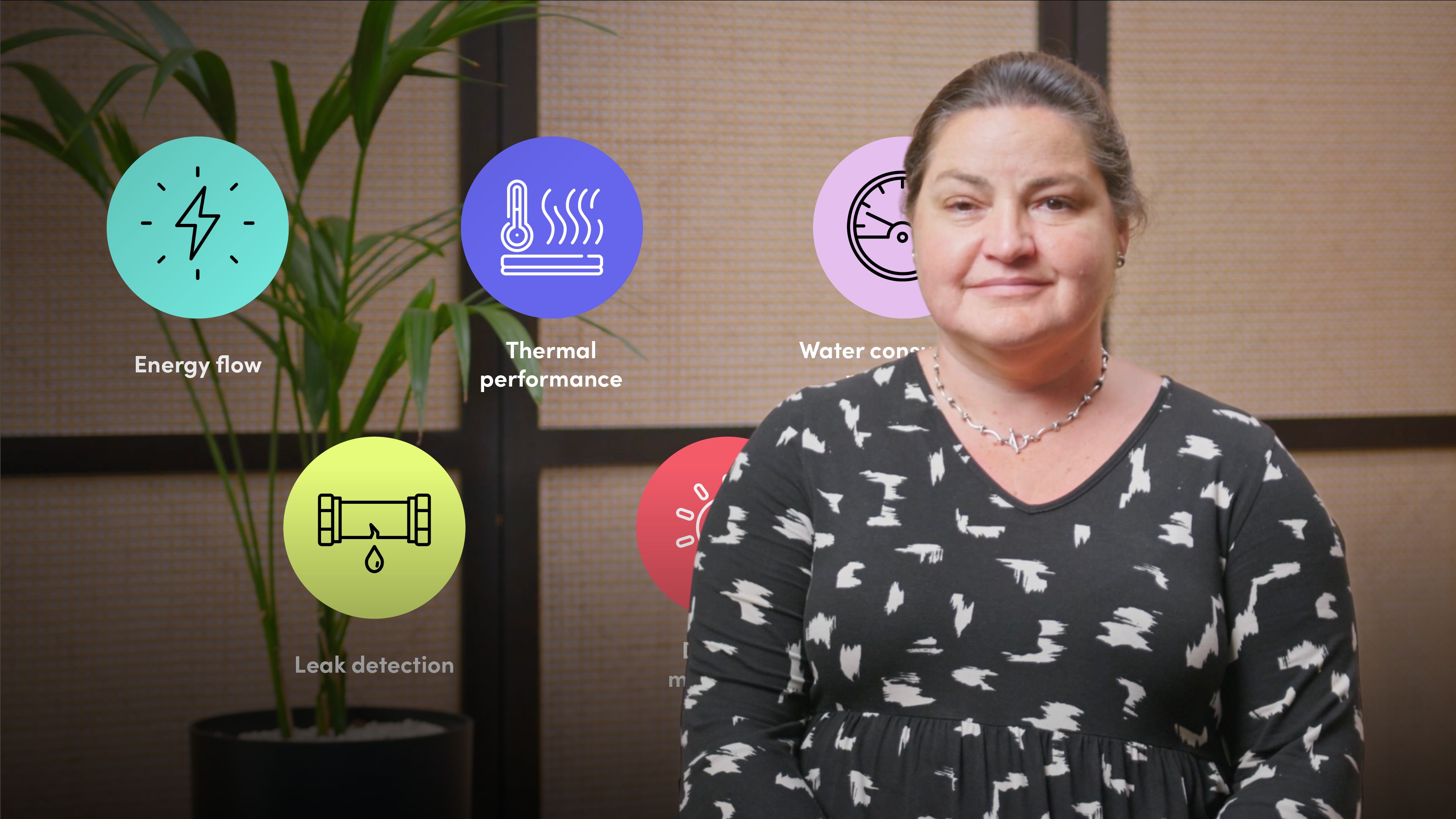
Sustainable Building Management Explained

Philippa Gill
20 years: Real estate investment
Buildings are made for people. How do we maintain them? Join Philippa Gill and explore how to make buildings easier to manage throughout their lifecycle.

Buildings are made for people. How do we maintain them? Join Philippa Gill and explore how to make buildings easier to manage throughout their lifecycle.
Sustainable Building Management Explained
11 mins 3 secs
Key learning objectives:
Outline sustainable building management techniques
Understand how to maintain a building’s lifetime sustainability performance
Examine smart building solutions
Explore health and wellbeing in sustainable buildings
Overview:
Sustainable building management combines human expertise, operational strategy, and technology. Skilled engineers and building managers can achieve significant energy reductions by using seasonal energy schedules, smart water management and reducing material consumption. Sustainable buildings are not just energy-efficient, they must support human health and comfort. Key considerations include indoor air quality, lighting and thermal comfort.
Summary
What are sustainable building management techniques?
Sustainable building management combines human expertise, operational strategy, and technology. Skilled engineers and building managers can achieve significant energy reductions, even in older buildings with manual systems, by understanding the building’s unique rhythms and occupancy patterns.
How can a building’s lifetime sustainability performance be maintained?
Maintaining long-term sustainability requires continual monitoring, adjustment, and improvement. Key strategies include:
- Creating daily, seasonal, and multi-year schedules for energy use that account for occupancy, mechanical systems, and environmental conditions.
- Managing water efficiently using low-flow fittings and addressing extremes of drought and flooding.
- Reducing material consumption and waste through careful procurement, recycling, and reuse, such as installing building-level filtration systems to avoid bottled water.
- Using lifecycle thinking to ensure maintenance, upgrades, and refurbishment sustain performance over decades.
What smart building tools are out there?
- BIM (Building Information Modelling): Provides a digital representation of the building, simulating energy and water use, thermal performance, and daylight monitoring, allowing the management team to optimise HVAC and other systems.
- Digital twins: Real-time replicas connected to sensors that monitor temperature, humidity, CO₂, and other metrics, using predictive analytics to improve energy efficiency, maintenance, and occupant comfort.
How does health and wellbeing factor into sustainable buildings?
Sustainable buildings are not just energy-efficient, they must support human health and comfort. Key considerations include indoor air quality, lighting and thermal comfort. Frameworks and certifications like WELL, Fitwel, and BREEAM help ensure buildings meet standards for air, water, light, movement, safety, accessibility, and mental wellness, bridging gaps where building codes are insufficient.
Philippa Gill
Philippa joined EVORA Global in January 2020, initially to focus on the expansion into Europe and our Climate Resilience Services. Given her background in private equity real estate, she brings deep knowledge of investment drivers and associated risk factors. She continues to sponsor our Social Wellbeing and EVOLVE education service lines at Executive level, while also providing senior strategic support to a number of Evora’s key global clients.
There are no available Videos from "Philippa Gill"